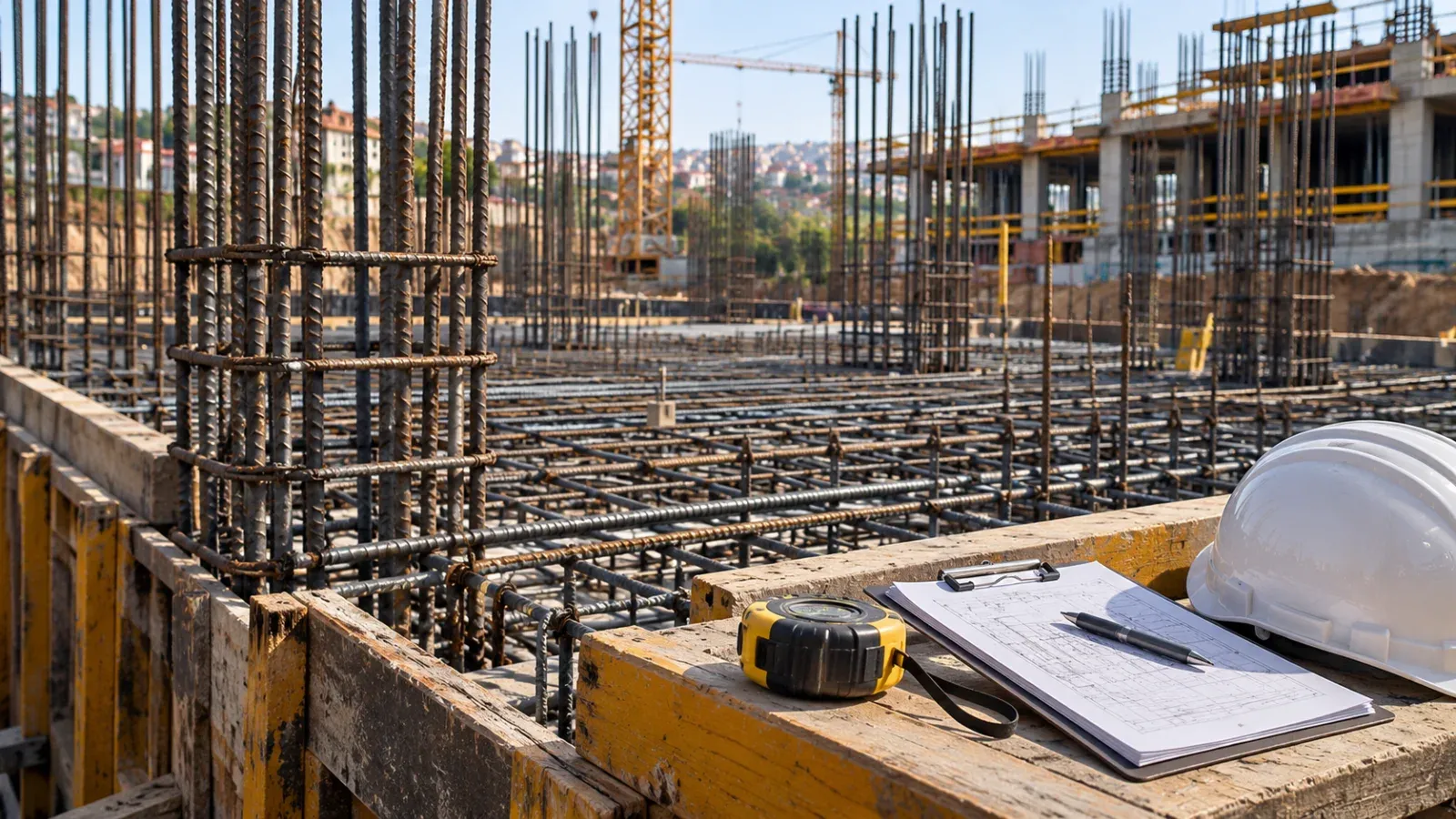
Earthquake-resilient homes in Istanbul are identified by evidence rather than by age or appearance: the date of the building permit, the soil and foundation survey, the building inspection file and the occupancy permit. Ask for those four things, check the title for any risky-building annotation, and you will know far more than a show flat can tell you. The questions below are the ones we would ask about any home, new or resale, before committing. Earthquake questions sit alongside the Turkish citizenship by property checks on valuation and deed; a building that fails them is not worth the passport.
Why the permit date matters more than the completion date
A building is designed to the earthquake code in force when its project was approved, not when the keys were handed over. A tower finished in 2020 may well have been designed under the 2007 rules if its permit predates 2019. That is not a criticism of the building, but it is the right starting point for your questions.
Turkey’s seismic design rules have been revised several times. The milestones most relevant to Istanbul buyers are summarised below.
| Permit period | Main rules in force | What to ask |
|---|---|---|
| Before 1998 | Earlier seismic codes, with limited independent inspection | Has a structural assessment ever been done? Is there a risky-building report? |
| 1998 to 2006 | The 1998 code; private building inspection under Law 4708 from the early 2000s | Which inspection firm signed off the building? Is the project file available? |
| 2007 to 2018 | The 2007 earthquake regulation | Was a soil survey approved with the permit? Is there an occupancy permit? |
| 2019 onwards | The Turkish Building Earthquake Code, published in March 2018 and in force from 1 January 2019, with the updated national hazard map | Which ground class and design values were used? Has the inspection firm’s final report been issued? |
Treat the table as a guide to questions, not a verdict. A well-built 2005 building can outperform a poorly built newer one, which is why the documents matter more than the year.
Ask for the ground survey and look up the site
Ground conditions vary from street to street in Istanbul. Two buildings a few hundred metres apart can sit on very different soil, and that applies as much to a coastal plot on the west Istanbul coast as to a hillside site further north. Modern permits require a soil and foundation survey (zemin etüdü), which classifies the ground and feeds into the structural design. Ask the developer or the seller’s building management for a copy, or at least the summary page.
You can also check the expected ground shaking at a location yourself. AFAD’s Turkey Earthquake Hazard Map, in force since January 2019, shows peak ground acceleration values by location (it requires an e-Devlet login). It is a hazard map, describing how strongly the ground may shake, not a risk rating for any particular building. Used alongside the soil survey, it helps you understand why two similar towers may have been designed differently.
Oversight of the people producing these reports is tightening. Law 7579, published in May 2026, amended the building inspection law to bring soil-survey firms and concrete producers under closer supervision, with the new soil-survey licensing regime due to start in a pilot province from the end of 2026. For buyers, the practical message is unchanged: ask to see the report, and ask who prepared it.
The occupancy permit and the inspection file
An occupancy permit (iskan) is the municipality’s confirmation that the finished building matches its approved permit. It matters for earthquake resilience because it is the last official check that the structure built is the structure approved. Ask for it on every completed building.
Ask too which building inspection firm supervised construction. Under Law 4708, an independent licensed firm monitors the project, from foundations to completion, and keeps records of concrete tests and site inspections. A developer confident in its building will usually let your engineer or lawyer see a summary.
Be careful with buildings that have extra floors or enclosed balconies added after completion. A building registration certificate obtained under the 2018 zoning amnesty records an irregularity for administrative purposes. It is not a structural approval. If you are comparing older and newer stock, our article on resale or new build for citizenship covers the wider trade-offs.
Urban transformation: risk or opportunity?
Under Law 6306 on urban transformation, a building can be assessed by a ministry-licensed institution and, if found risky, designated for demolition and rebuilding. A risky-building designation is annotated on the title, so the title extract your lawyer obtains will show it. An e-Devlet service run by the ministry responsible for urbanisation also lets owners apply for and track assessments.
For a resale buyer, an annotation is a reason to stop and take advice. Ownership continues through your share of the land, but the flat itself may be demolished, rebuilt over several years and reallocated by agreement among owners. That can be good value for a patient owner and a poor fit for someone who needs a usable home now, or who is tied to a three-year holding period.
The absence of an annotation does not mean a building has been assessed and found safe. It simply means no designation has been recorded.
DASK, and what it does not do
Compulsory earthquake insurance, issued under the DASK scheme, covers damage to the building up to a set limit and is required for residential title deed transactions. It is inexpensive and essential, but it is a financial backstop, not a measure of quality. It does not cover contents, and its limit may be below the cost of rebuilding a high-specification flat. Many owners add a broader home insurance policy on top. The running costs involved are covered in our article on Istanbul property ownership costs.
Earthquake-resilient homes: questions for the seller or developer
- What is the building permit date, and which earthquake code was the design based on?
- May I see the soil and foundation survey, or its summary?
- Which building inspection firm supervised construction, and is its final report available?
- Has the occupancy permit been issued? If not, when is it expected?
- Have any floors, balconies or structural walls been altered since completion?
- Is there any risky-building annotation or a pending assessment?
- For off-plan units: what foundation system is used, and are seismic isolators part of the design?
Clear answers to these questions are part of a calm, informed purchase, wherever in the city you are looking. Our page on Istanbul areas for citizenship property compares locations, the buying guide places these checks in sequence, and the citizenship by property overview explains what the authorities require of the property itself.
Frequently asked questions about earthquake-resilient homes Istanbul
Can I commission my own structural assessment before buying?
For a resale flat, yes, with the owners’ cooperation. A civil engineer can review the project file and, where agreed, arrange core samples, although taking samples affects the whole building and usually needs the management’s consent. For off-plan units, a review of the permit drawings and soil survey is the realistic option.
Are some parts of Istanbul on firmer ground than others?
Ground conditions do vary across the city, but they also vary within neighbourhoods, so district-level generalisations are unreliable. The soil survey for the specific plot and the AFAD hazard values for that location are better guides than a district’s reputation.
Does seismic isolation make a building earthquake-proof?
No building is earthquake-proof. Isolators reduce the forces transmitted to the structure and are a sign of serious engineering intent, but they are one part of a design that also depends on soil, materials and workmanship.
If you would like help gathering these documents for a property you are considering, tell us which one and we will explain what to request.