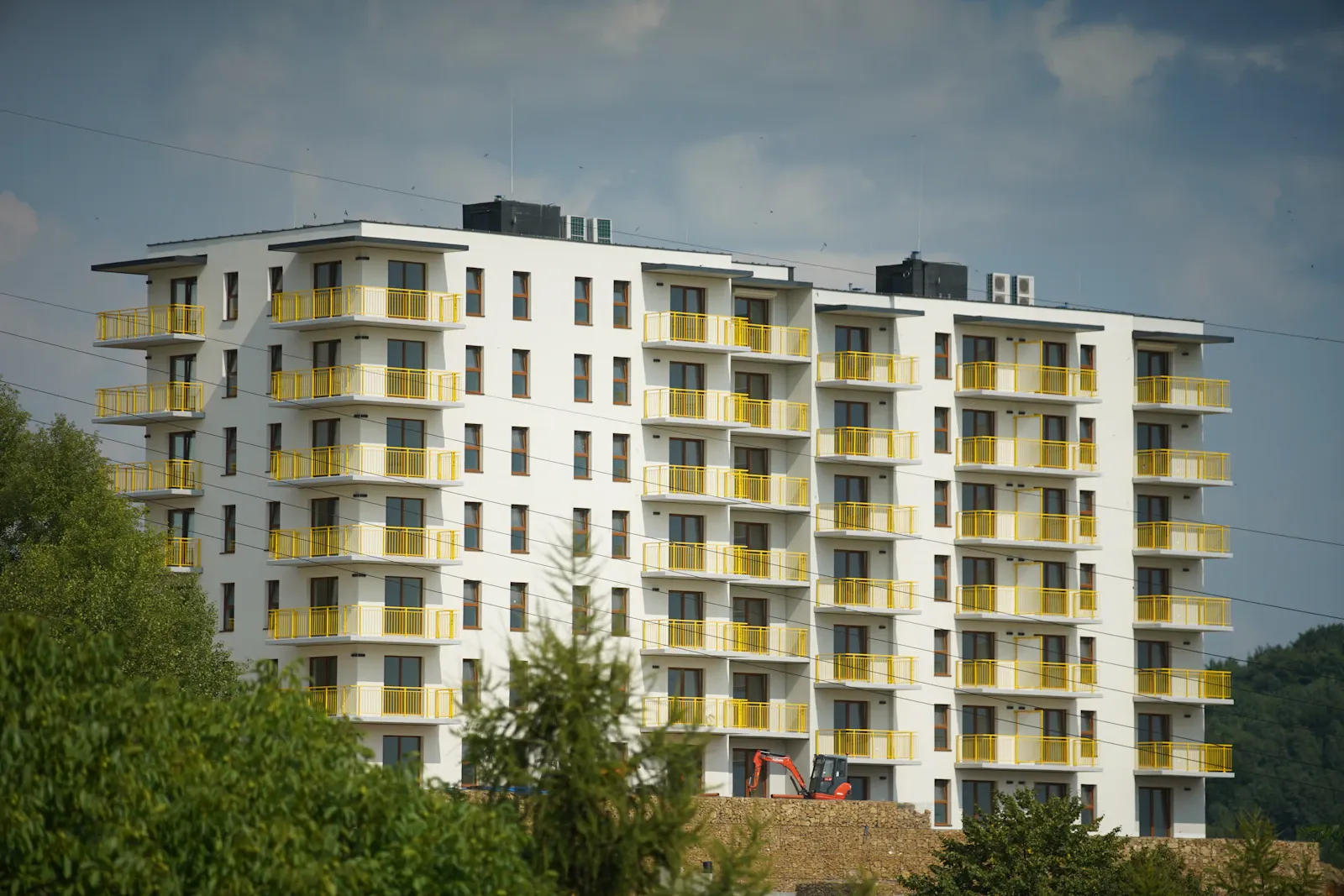
The VAT exemption for foreign buyers in Turkey comes from VAT Law No. 3065, Article 13(i). It removes VAT on the first sale of a new home or workplace by the builder to a buyer who is not resident in Türkiye, provided the price is paid in foreign currency brought into the country. On a new flat the saving is significant, because VAT on units with building permits issued since April 2022 is generally 10% on the first 150 square metres and 20% above that. The condition most people get wrong is the holding period: since 1 May 2022 it has been three years, not one.
What the VAT exemption for foreign buyers in Turkey covers
The exemption is narrow in scope, and every element has to fit:
- First delivery only. The seller must be the builder or developer making the first sale. A resale by a previous owner does not qualify.
- Residence or workplace. The unit must be defined as a dwelling, office, shop or similar in the building permit.
- Ready for use. The unit must be physically complete, with condominium servitude established where required.
- More than one unit is allowed. An eligible buyer can use the exemption on several purchases.
To put a number on it: a 120-square-metre new flat priced at USD 400,000, in a building permitted after April 2022, would normally carry 10% VAT, or USD 40,000. For an office or shop at the standard 20% rate, the same price would mean USD 80,000. Whether that saving is available depends entirely on the conditions below.
The first-delivery rule is one reason the choice between resale and new build matters for a citizenship buyer. Our comparison of resale and new-build property looks at the other differences.
Who counts as a foreign buyer
Three groups of buyer qualify:
- individuals of foreign nationality without residence in Türkiye;
- Turkish citizens holding a work or residence permit abroad who have lived there for over six months, with some exceptions;
- foreign companies with no legal or business headquarters in Türkiye that do not earn income there through a permanent establishment or representative.
Residence is the subtle point. For tax purposes a person is resident in Türkiye if their domicile is there, or if they spend over six months of a calendar year in the country. Temporary absences do not break the count. A buyer who has already been living in Istanbul for most of the year, for example on a residence permit, may therefore fall outside the exemption even though they hold a foreign passport. Have a tax adviser confirm how it applies to you before you rely on it.
How the money has to arrive
The payment rules are specific, as summarised by Erdem & Erdem in their 2024 note on the exemption:
- Before the sales invoice date, at least 50% of the price has to arrive in Türkiye as foreign currency and reach the seller.
- The rest must arrive in foreign currency within one year.
- The buyer can pay the seller in lira, as long as the lira comes from foreign currency brought in from abroad and the trail can be shown.
- The person invoiced and the person bringing in the currency should be the same.
In practice the buyer submits documents to the tax office and receives an exemption letter, which the developer needs before issuing a VAT-free invoice. If the exemption is applied when the conditions are not met, the buyer becomes jointly liable with the developer for the unpaid VAT, a tax loss penalty and late interest.
The three-year holding rule and what changed
When the exemption was introduced in 2017, the buyer had to keep the property for one year. Law No. 7394 extended that to three years for sales from 1 May 2022, with the implementing communiqué following later that month. If the property is sold within three years, the VAT that was not charged, plus deferral interest, must be paid before the title transfer. The land registry records the restriction on the deed.
Older articles, and some sales material, still quote the one-year rule. Today the one-year period applies only to bringing in the balance of the price. Nothing has changed since: the tax package passed as Law No. 7566 in December 2025 did not amend Article 13(i). The Revenue Administration’s VAT General Application Communiqué remains the reference text.
How it interacts with a citizenship application
The VAT exemption and Turkish citizenship by property are separate regimes with different tests, and they do not always line up.
| Point | VAT exemption | Citizenship by property |
|---|---|---|
| Property type | First sale of a new residence or workplace by the builder | New or resale, with qualifying title |
| Payment timing | 50% before invoice, balance within one year | Threshold amount paid and documented before applying |
| Currency proof | Foreign currency brought into Türkiye | Foreign currency converted with a DAB certificate |
| Holding period | Three years from the deed | Three years, annotated on the deed |
| Who decides | Tax office | Ministry confirmation, then the President |
Three practical consequences follow. A citizenship buyer will normally pay the full price up front anyway, so the 50% rule is rarely the problem. The two three-year periods can run side by side, which is covered in more depth in our guide to the three-year rule. And the question of whether VAT itself counts towards USD 400,000 is a separate one, answered in our article on the threshold.
The exemption also applies to workplaces, so a shop or office bought from the developer can qualify on both fronts. Our guide to commercial property for citizenship covers what else to check.
Before you sign
- Confirm in writing that this is the first sale by the builder.
- Check the building permit and that the unit is complete and ready for use.
- Establish your own tax residence position for the current year.
- Obtain the tax office exemption letter before the invoice date.
- Send funds in foreign currency from your own account and keep every receipt.
- Make sure the sales contract says who bears the VAT if the exemption is later refused.
VAT is one item in a longer list of purchase costs; our costs and ownership hub covers the rest. The citizenship process itself is explained step by step in Turkish citizenship by property; new-build units are in our citizenship property collection.
Frequently asked questions about VAT exemption for foreign buyers in Turkey
Can I use the exemption on an off-plan unit?
The exemption applies at delivery, and the unit has to be ready for use at that point. Payments made during construction can count towards the 50% that must arrive before the invoice, as long as they were made in foreign currency from abroad. Ask the developer’s accountant how they will document this before you pay.
Who applies for the exemption, me or the developer?
Both have a role. The buyer usually obtains the exemption letter from the tax office and hands it to the developer, who then issues the invoice without VAT and declares the sale in its own VAT return. Your lawyer can coordinate the paperwork.
Does the exemption also reduce the title deed fee?
No. Article 13(i) concerns VAT only. The title deed fee is charged separately at the land registry and is calculated on its own rules.
Is a commercial unit taxed at the same VAT rate as a home?
No. Offices and shops are generally subject to the standard 20% rate, while homes can benefit from reduced rates on the first 150 square metres. That makes the exemption especially valuable on commercial purchases.
If you would like us to check whether a particular new-build unit could be bought VAT-free, send the details through the enquiry form.