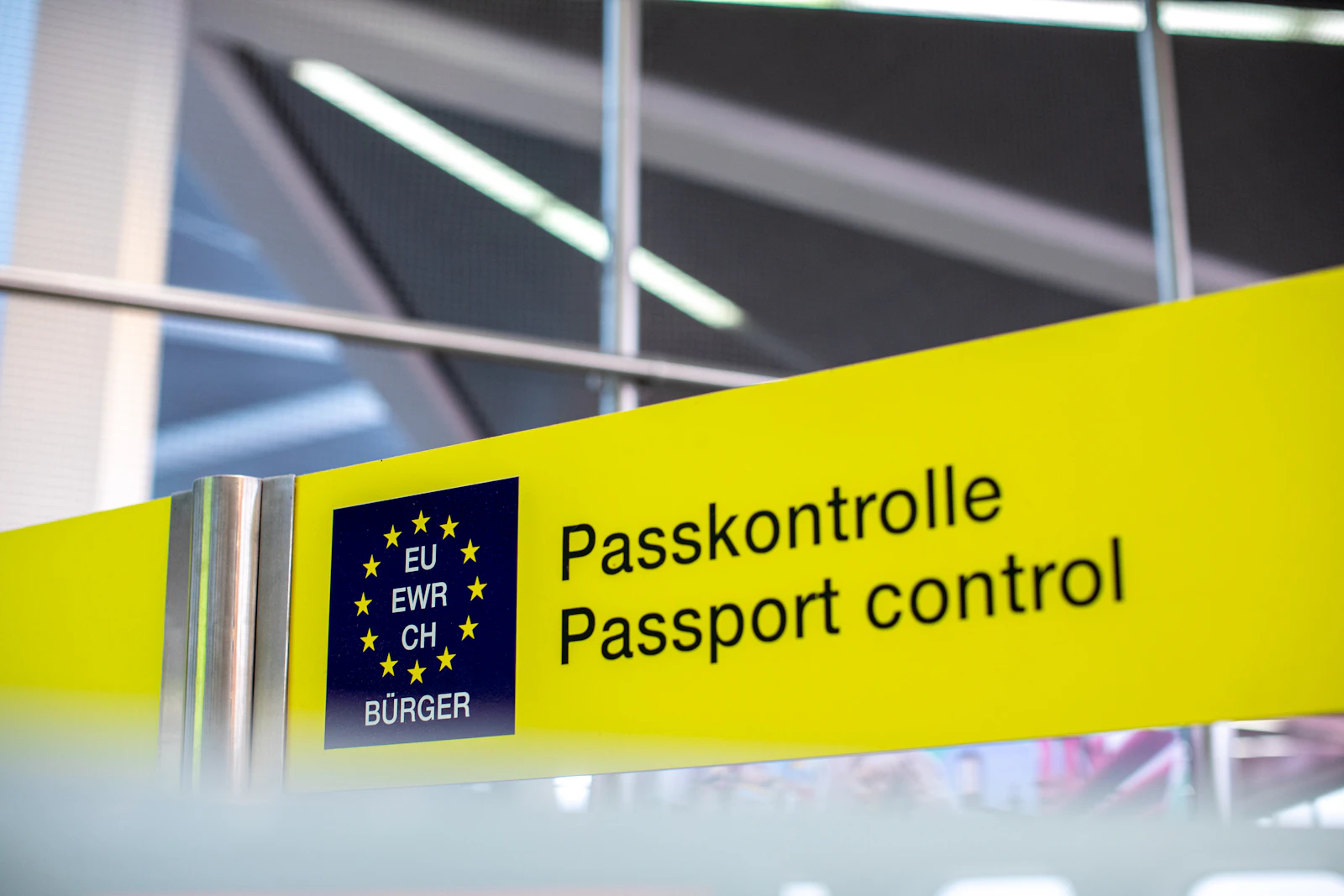
The real Turkish passport benefits are full citizenship rights in Türkiye, entry without a visa arranged in advance to 112 destinations (Henley Passport Index, November 2026), and access to the US E-2 treaty investor visa category. What it does not give is any right to live or work in the European Union, and Turkish citizens still need a visa for the Schengen area, the United Kingdom, the United States and Canada. For an investor, the honest picture is a solid mid-ranking passport with some specific advantages, not a key to Europe.
What citizenship gives you inside Türkiye
The passport is the visible part. The legal change is citizenship itself, and that matters most if you plan to spend time in the country:
- You can live in Türkiye indefinitely without renewing residence permits.
- You can work or run a business without a work permit.
- Restrictions that apply to foreign buyers of property no longer apply to you as a citizen.
- You can vote and use public services on the same terms as other citizens.
- A spouse and children under 18 included in the application receive the same status.
Citizenship also brings obligations. Male citizens of service age face military service rules, which we cover in our note on military service for investors. Whether you can keep your existing nationality depends on your home country as well as Türkiye, which is the subject of our guide to dual citizenship.
Turkish passport visa-free countries (November 2026)
We checked the Henley Passport Index on 11 November 2026. It ranks the Turkish passport 51st, level with Qatar, with 112 destinations that can be entered without arranging a visa in advance (Henley Passport Index, global ranking). The 2025 figures had it 46th on 116, so the score has dipped a little this year. Henley’s 112 mixes three kinds of entry: 73 destinations with no visa at all, 33 that issue the visa at the border, and 6 that want an electronic travel authorisation before you fly.
The table groups those 112 destinations by region, using Henley’s classification as published on that date.
| Region | No visa needed | Visa on arrival or eTA |
|---|---|---|
| Balkans and Eastern Europe | Albania, Belarus, Bosnia and Herzegovina, Kosovo, Moldova, Montenegro, North Macedonia, Serbia, Ukraine | None |
| Caucasus and Central Asia | Azerbaijan, Georgia, Kazakhstan, Kyrgyzstan, Mongolia, Uzbekistan | Armenia (on arrival) |
| Middle East and North Africa | Iran, Jordan, Libya, Morocco, Oman, Tunisia | On arrival: Bahrain, Egypt, Kuwait, Lebanon, Qatar, Saudi Arabia |
| East and Southeast Asia, Pacific | Brunei, Cook Islands, Fiji, Hong Kong, Indonesia, Japan, Macao, Malaysia, Micronesia, Philippines, Singapore, Thailand, Vanuatu | On arrival: Cambodia, Laos, Marshall Islands, Niue, Palau, Samoa, Taiwan, Timor-Leste, Tonga, Tuvalu. eTA: South Korea |
| South Asia | None | On arrival: Bangladesh, Maldives, Nepal. eTA: Sri Lanka |
| Latin America and the Caribbean | Antigua and Barbuda, Argentina, the Bahamas, Barbados, Belize, Bolivia, Brazil, Chile, Colombia, Costa Rica, Dominica, Dominican Republic, Ecuador, El Salvador, Guatemala, Haiti, Honduras, Jamaica, Nicaragua, Panama, Paraguay, Peru, St Lucia, St Vincent and the Grenadines, Suriname, Trinidad and Tobago, Turks and Caicos Islands, Uruguay, Venezuela | eTA: Mexico, St Kitts and Nevis |
| Sub-Saharan Africa | Angola, Botswana, Equatorial Guinea, eSwatini, The Gambia, Mauritius, São Tomé and Príncipe, Senegal, South Africa, Zambia | On arrival: Burundi, Comoros, Djibouti, Ethiopia, Guinea-Bissau, Madagascar, Mozambique, Namibia, Rwanda, Sierra Leone, Sudan, Tanzania, Zimbabwe. eTA: Kenya, Seychelles |
An index is a summary drawn up abroad. The legal reference for Turkish travellers is the country-by-country page of Türkiye’s Ministry of Foreign Affairs (mfa.gov.tr, in Turkish), and where the two disagree the ministry’s wording is the one to follow. Read on 11 November 2026, it gives these rules for ordinary passports:
| Destination | Rule for an ordinary Turkish passport (MFA, November 2026) |
|---|---|
| Japan, Brazil | Visa-free for up to 90 days |
| South Korea | Visa-free for up to 90 days, after an online K-ETA registration before travel |
| Singapore | Visa-free, 30 days on first entry; up to 90 days if an extension is approved |
| Malaysia | Free 90-day tourist visa stamped on entry |
| Thailand | Visa-free for 30 days for entries from 15 September 2026 (previously 60); an online digital arrival card is due at least 3 days before arrival |
| Georgia | Visa-free for up to one year, also with the new Turkish ID card; health and accident travel insurance covering the whole stay compulsory since 1 January 2026 |
| Azerbaijan | Visa-free for up to 90 days; the ID card is enough on direct trips from Türkiye |
| Kazakhstan | Visa-free for 90 days in any 180; since 1 November 2026 travellers apply for a free online entry permit at least 72 hours before departure, compulsory from 1 July 2027 (under-16s and over-65s exempt) |
| Qatar, Jordan, Lebanon | Visa-free for 90 days in any 180 |
| Iran | Visa-free for 90 days |
| Egypt, Kuwait | Visa required but issued at the border (Kuwait: free, 90 days) |
| Bahrain, Saudi Arabia | Visa required; Bahrain issues a 30-day e-visa before travel, Saudi Arabia a tourist e-visa online or at airport kiosks |
| Iraq | Visa-free for 30 days only for travellers under 15 or over 50; others need a visa |
| United Arab Emirates, Russia, Pakistan | Visa required |
| Schengen states, United Kingdom, United States, Canada | Visa required |
Note the small differences: Henley files Qatar, Lebanon and Bahrain under visa on arrival, while the ministry lists Qatar and Lebanon as visa-free and Bahrain as an e-visa country. The ministry’s list covers tourist trips only; study, work and longer stays follow other rules, and any of these entries can change at short notice, so check the page again shortly before you book.
The US E-2 treaty investor visa
Türkiye is on the US State Department’s list of treaty countries for the E-2 investor visa, with the treaty in force since 18 May 1990 (travel.state.gov). That is the single most concrete reason some investors value a Turkish passport, because many nationalities have no E-2 access at all.
It is worth being precise about what that means:
- The E-2 is a non-immigrant visa for nationals of treaty countries who invest a substantial amount in a US business that they develop and direct.
- Holding a Turkish passport makes you eligible to apply. It does not mean you will be approved; a US consular officer decides.
- The US sets its own rules on nationals whose citizenship was obtained through investment, and those rules can change.
- The E-2 does not by itself lead to a green card.
If the E-2 is part of your reason for buying, speak to a US immigration lawyer before you commit to the Turkish purchase, not after the passport arrives.
What a Turkish passport does not give
Some marketing blurs these points, so it is worth stating them plainly.
- No EU rights. Türkiye is not an EU member, and its citizens have no right to live, work or study in EU countries without the relevant national permit.
- No Schengen visa waiver. Turkish citizens apply for a Schengen visa in the normal way. The foreign ministry also notes that Schengen states do not accept passports older than ten years for visa applications.
- No UK access. A visa is needed for the United Kingdom, and in some cases for transit as well.
- No automatic Gulf residence or work rights. Those still depend on each country’s own visas and permits.
- No tax status by itself. Tax residence in Türkiye is assessed on domicile and time spent in the country, so take tax advice rather than assuming either way.
Is the passport a good reason to buy?
That depends on what you hold now. For a family whose current passport needs a visa for most of Asia and Latin America, the travel gain can be meaningful, and the E-2 link may matter to anyone with American plans. For a family that already holds an EU or similar passport, the travel benefit is small, and the case for buying rests on wanting a base in Istanbul, a second citizenship as a long-term safeguard, or a dollar-priced asset.
Consider two buyers. A family from a country whose passport needs a visa for Japan, Brazil and Singapore gains visa-free access to all three, plus a route to apply for the E-2. A family that already travels on a German passport gains none of that, and their decision should rest entirely on the property and on what a second citizenship means to them over the long term.
In both cases the property should make sense on its own merits, because you will own it for at least three years and citizenship is never guaranteed. The central guide on Turkish citizenship by property sets out the process, the citizenship rules hub covers the conditions, and our collection of citizenship-eligible homes shows what a qualifying budget buys in different districts.
Using the passport once you have it
After approval you are entered in the population register, then you apply for a Turkish ID card and passport, a sequence covered in our article on the ID card and passport after citizenship. A few habits help:
- Enter and leave Türkiye on your Turkish documents once you have them.
- Book flights in the name and passport you will travel on, and keep spellings consistent across both nationalities.
- Check your other country’s rules on which passport to use when entering and leaving it.
- Keep the Turkish passport valid well ahead of any visa application.
Frequently asked questions about Turkish passport benefits
How many countries can I visit visa-free with a Turkish passport?
On the Henley Passport Index as checked on 11 November 2026, 112 destinations: 73 with no visa at all, 33 that issue the visa at the border and 6 that ask for an online travel authorisation. The Schengen area, the United Kingdom, the United States and Canada still require a visa.
Does a Turkish passport make a Schengen visa easier to get?
Not in any formal sense. You apply through the normal procedure, and the consulate looks at your travel history, ties and finances as it would for any applicant. A strong record of previous visas tends to help more than the passport itself.
Does the E-2 visa let my family live in the United States?
Under US rules a spouse and unmarried children under 21 can usually accompany an E-2 holder, though the children’s status follows the US rules rather than the Turkish ones. Their nationality and the conditions that apply should be confirmed with a US immigration lawyer.
Is my Turkish citizenship tied to keeping the property for ever?
No. The commitment is not to sell for three years. After that the property can be sold, and citizenship does not depend on it. Citizenship can, however, be cancelled if it was obtained through false statements or concealed facts.
Will the Turkish passport rise in the rankings?
Nobody can say. Rankings shift as countries change their visa policies, in both directions. Buy for the access the passport gives today and treat any improvement as a bonus.
If you would like to talk through whether citizenship by property fits your family’s plans, send us a few lines through the enquiry form.