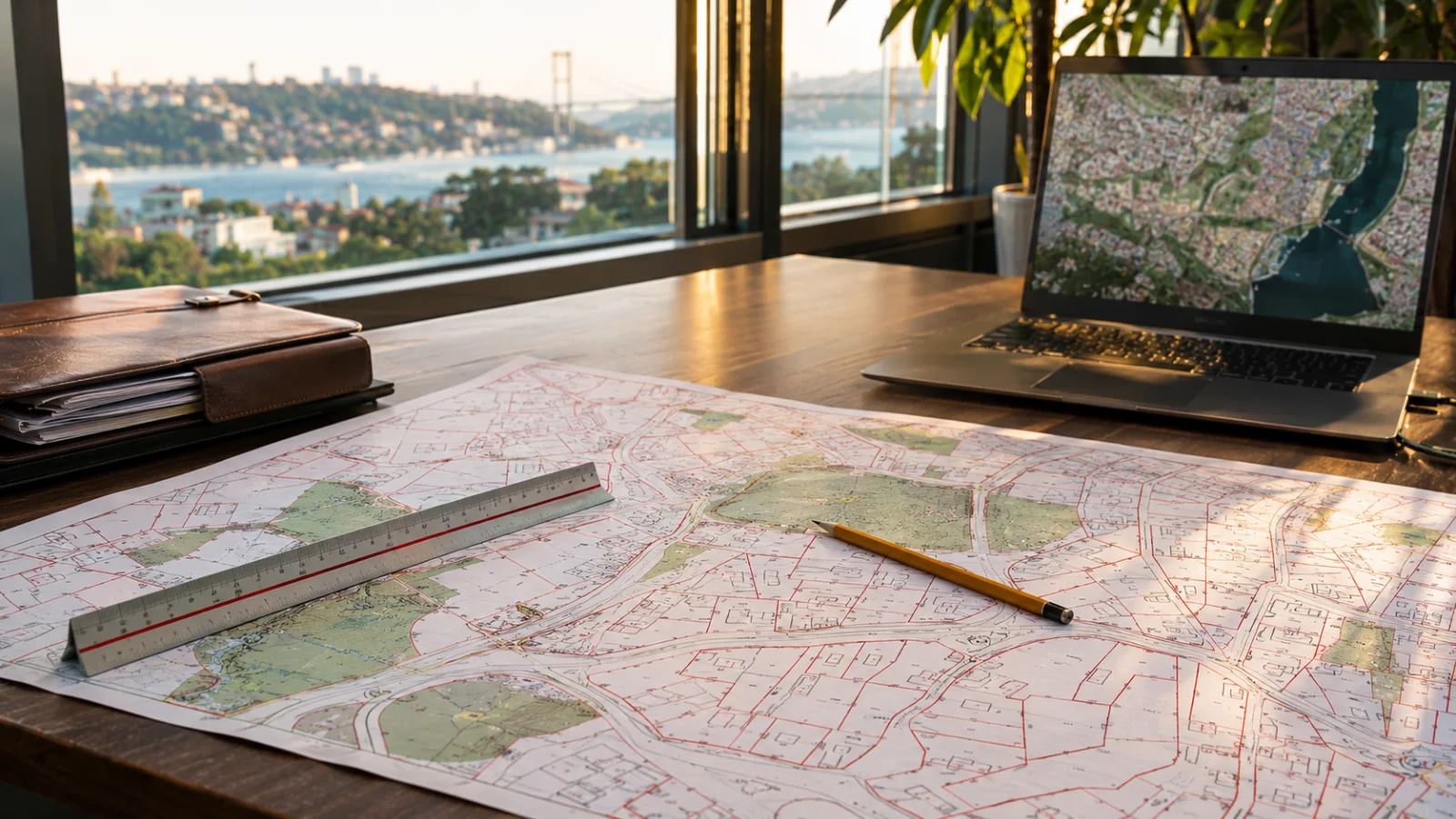
There is no Istanbul district where foreigners cannot buy as a whole. The restrictions work parcel by parcel: land inside a military prohibited zone or certain security zones cannot pass to a foreign individual, and some other zones need permission. Since January 2020 the land registry has decided this from its own records instead of writing to the military for every sale, so for most homes in established residential areas the check no longer adds weeks to the timetable.
What the law actually restricts
The rules come from two laws working together. Article 35 of the Land Registry Law (Tapu Kanunu) governs foreign individuals’ ownership generally, and Law No. 2565 on Military Prohibited Zones and Security Zones defines the areas around defence sites. The official Investment Office guide sums up the effect: foreign individuals may not acquire or lease real estate inside military prohibited zones, and in special security zones they need the governor’s permission.
Article 35 also allows the President to designate strategic areas where foreign acquisition is barred, and gives the state powers over foreign-owned property found to fall inside them. In practice this is rare in residential Istanbul, but it explains why a lawyer checks the parcel, not just the building’s address.
| Type of area | Foreign individual can buy? |
|---|---|
| Ordinary residential or commercial parcel | Yes, subject to the normal rules |
| Military prohibited zone | No |
| Special security zone | Only with governor’s permission |
| Strategic area designated by the President | Can be closed to foreign acquisition |
How the land registry checks it now
For years, the registry office sent each foreign buyer’s file to the relevant military command and waited for a written answer that the parcel lay outside restricted zones. Turkish legal commentary from that period describes waits of around six to eight weeks for the first foreign sale in a building, with later sales leaning on the earlier answer. Some provinces were taken out of the system from 2017 onward as their mapping was completed. Istanbul was not among the early groups.
That changed with a TKGM instruction dated 21 January 2020. After joint work with the General Staff, military zone data had been entered into the land registry in every province, so registry offices were told to decide foreign individuals’ applications from their own records without querying the military, provided the other legal conditions are met. The instruction is summarised in the published text of the 2020 instruction.
So the “military clearance letter” that older articles warn about is, for an individual buyer, now a records check made inside the registry when your sale application is processed.
How long the check takes in 2026
Because the information sits in the registry, the zone check runs as part of the ordinary title transfer rather than as a separate stage. For a standard apartment in a developed neighbourhood, you should not need to budget extra weeks for it.
Two caveats are worth keeping in mind:
- Edge cases still take longer. A parcel near a defence installation, or one where the registry needs clarification, can still prompt questions or a permission process. That is where time is lost.
- Other checks can be slower. Delays at the registry more often come from the valuation report, document problems or nationality-related checks than from zoning. Our citizenship timeline guide shows where the real waiting usually happens.
Companies with foreign capital are treated differently. Their acquisitions fall under Article 36 and a separate permission regime, which is outside the scope of a personal citizenship purchase.
Where foreigners cannot buy: reading the map sensibly
We do not publish a list of “forbidden neighbourhoods” because the restriction rarely follows neighbourhood lines. A zone may cover a strip of land around a barracks, a naval site or another installation while the streets beyond it are perfectly open. Two buildings only a few hundred metres apart may be treated quite differently.
What this means when you choose a unit:
- Larger new developments in districts such as Başakşehir, Ataşehir or Sarıyer’s Maslak area are usually sold to foreign buyers routinely. A track record of registered foreign sales in the same block is reassuring, though it is not a substitute for checking your parcel.
- Single plots, older villas and land deserve more caution, especially along the coast, on the Bosphorus, near the city’s edges or close to any visible military site.
- Off-plan projects should be checked at the land parcel level before you reserve, since the future building will sit on that parcel.
Questions to ask before you reserve
Before paying a deposit, ask your lawyer or adviser to confirm:
- The exact province, district, neighbourhood, block (ada) and parcel number of the unit.
- Whether the registry record shows any restriction on transfer to a foreign individual.
- Whether foreign buyers have already registered units in the same building or parcel.
- Whether the purchase contract lets you recover your deposit if the transfer to a foreign owner is refused.
TKGM’s foreign-buyer service, Your Key Türkiye, also offers a parcel query tool and a contact line. Use it alongside the steps in verifying a property’s eligibility for citizenship, which covers valuation and title status as well.
If the registry says no
A refusal on zoning grounds is final for that parcel as far as a foreign individual is concerned. There is no fee you can pay or form you can file to turn a prohibited zone into an open one. The realistic options are to walk away or, where the seller agrees, to switch to another unit on an unrestricted parcel.
This is why the order of steps matters. Picture a buyer who falls for a garden villa on a quiet lane, pays a non-refundable reservation fee and only then asks a lawyer to look at the title. If the parcel turns out to sit inside a restricted strip, the buyer is negotiating for a refund from a weak position. Reverse the order, check first and pay second, and the same discovery costs nothing. That is also why the deposit clause in point four above is worth negotiating.
Zoning and citizenship are separate tests
A unit that passes the zone check can be registered in your name. Whether that purchase supports an application for Turkish citizenship by property depends on further conditions: the value, the way the money arrived, the three-year annotation and the authorities’ own review. Nationality rules sit alongside both; our guide to which nationalities can buy property in Türkiye covers that part, and the wider framework is in the citizenship rules hub.
Frequently asked questions about where foreigners cannot buy
If a parcel is later declared a restricted zone, do I lose my home?
The law gives the state powers over foreign-owned property in areas later designated as strategic or restricted, including ordering its sale. This is uncommon in residential Istanbul, but it is one reason to avoid parcels right beside defence sites. A lawyer can tell you whether anything on the record points to that risk.
Does a Turkish citizen face the same zone rules?
Not in the same way. The ownership bans discussed here are aimed at foreign individuals; rules for Turkish citizens are different and depend on the type of zone. Planning and use restrictions near defence sites can affect any owner.
Can I rent a flat inside a military zone even if I cannot buy it?
The Investment Office guidance says foreign individuals may not acquire or lease real estate in military prohibited zones. If a rental is near a defence site, ask the landlord or an agent to confirm its status.
If you have a building in mind and want its parcel checked before you commit, tell us the address or project name and we will look into it with you.