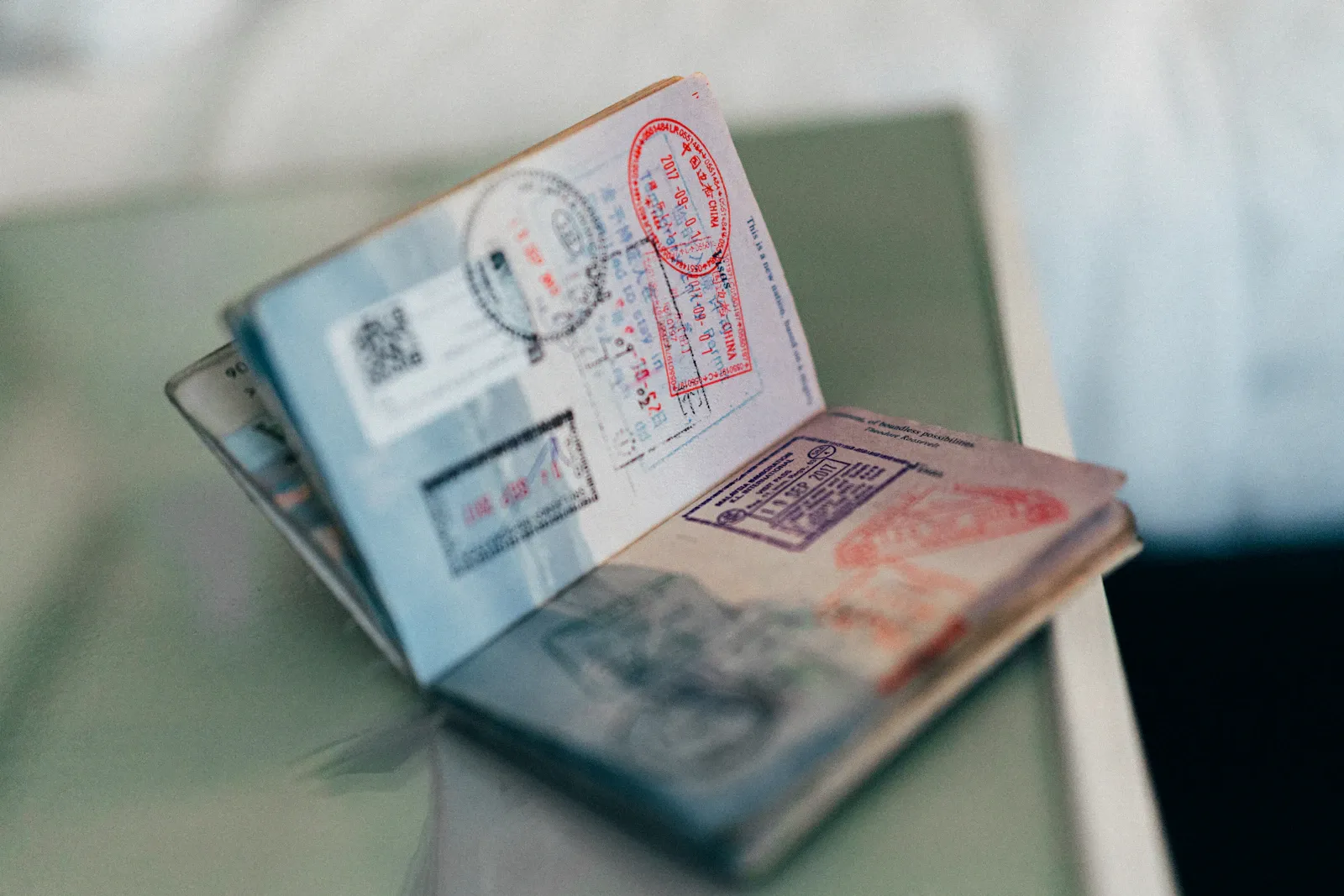
Turkish dual citizenship is permitted: Türkiye does not ask investors to give up their existing nationality when they acquire Turkish citizenship through property. The open question is your home country. Some states allow a second nationality freely, some require permission or a declaration, and some treat the voluntary acquisition of another citizenship as a reason to lose their own. That answer has to come from your own government, and it should be settled before you buy.
Turkish dual citizenship: what the law says
The Turkish Citizenship Law No. 5901 addresses multiple citizenship directly. Article 3 defines it as a Turkish citizen holding more than one citizenship at the same time, and Article 44 provides for the population register to record that a person holds more than one nationality. The law treats the status as an ordinary fact to be registered rather than something to be prevented.
The investment route in Article 12 contains no requirement to renounce a previous nationality. Unlike some countries’ naturalisation schemes, you are not asked to hand in your old passport or to prove that you have started a renunciation process. Your Turkish citizenship sits alongside the one you already have, as far as Türkiye is concerned.
For the conditions of the investment itself, our guide to Turkish citizenship by property is the place to start.
Your home country decides the other half
Türkiye’s permission does nothing to protect your original citizenship if your own country’s law takes it away. Nationality is governed by each state for itself, and the rules vary more than most people assume. Broadly, states fall into a few patterns:
- countries that accept dual nationality without formalities
- countries that accept it but expect citizens to declare a new nationality
- countries that require permission before a citizen acquires another nationality
- countries where acquiring another nationality voluntarily leads to loss of the original one, sometimes automatically
- countries that do not recognise the second nationality on their own territory, while not formally removing their own
We deliberately do not list which country falls into which group. Laws change, exceptions exist for particular cases, and the consequences of getting it wrong are serious. The only reliable answer comes from your own government’s official sources: its interior ministry, its civil registry or its embassy in Ankara or consulate in Istanbul.
Questions to put to your own authorities
When you contact them, be specific. A useful set of questions:
- May I acquire another nationality without losing mine?
- Do I need permission in advance, or only to notify you afterwards?
- Is there a deadline for notification, and what form does it take?
- Do the same rules apply to my spouse and minor children?
- Will I be required to enter and leave the country on your passport?
- Are there consequences for public employment, military obligations or property rights?
Ask for the answer in writing, or note the official web page and the date you read it. If the position is unclear, a lawyer in your home country is a better source than an agent in Istanbul, however experienced.
Notifying the authorities
There are two directions of notification to keep in mind.
Telling your home country
If your home country expects a declaration, that is your responsibility, not something the Turkish authorities will do for you. Make it within any deadline and keep proof that you did.
Telling Türkiye about another nationality later
Once you are a Turkish citizen, Article 44 applies if you acquire a further nationality in future. The population authority’s guidance on registering multiple citizenship explains that you can notify through a Turkish mission abroad or directly at a population office, with the foreign identity document or birth certificate, a petition form and a certified Turkish translation.
The same guidance stresses matching identities. Minor spelling differences between alphabets are accepted, but where name, surname, parents’ names, place or date of birth differ between the Turkish record and the foreign document, the multiple citizenship is not recorded without a Turkish court decision correcting the record. This is a good reason to make sure your details are consistent from the very first document you submit; documents for citizenship by property covers what each family member supplies.
Practical points for living with two passports
Travel. Many countries expect their own citizens to enter and leave on that country’s passport. Use the Turkish document for Türkiye where you can, and your other passport where its country requires it. Keep both valid, and avoid letting one lapse simply because you travel on the other.
Consular help. A dual national in one of their two countries of nationality is generally treated by that country as its own citizen. Do not expect the other country’s consulate to be able to intervene in the same way it might for a sole national.
Military service. Türkiye and some home countries both have compulsory service rules. Turkish law has specific provisions for men who become citizens later, explained in our article on getting your ID card and passport. Check your home country’s rules separately.
Tax. Citizenship and tax residence are different things. Holding a Turkish passport does not, on its own, make you tax resident in Türkiye, and your home country may tax on the basis of residence or, in a few cases, citizenship. Take tax advice in both places.
Names. Keep the spelling of your name as consistent as the two alphabets allow across both countries’ documents. Every later registration, from a child’s birth to a property sale, is easier when the records clearly describe the same person.
Property and assets. Once Turkish, you hold property in Türkiye as a citizen rather than as a foreigner. Your home country’s rules on reporting foreign assets or on inheritance still apply to you as one of its citizens.
Children. Children born after you become Turkish acquire Turkish citizenship by birth, and may also acquire yours. Register them in both systems promptly.
When dual citizenship should change your plans
If you learn that your country would strip your nationality, the decision is no longer just about property. Some buyers in that position choose a long-term residence route instead, or have a spouse whose country allows dual nationality apply as the main investor. Others go ahead knowingly, having weighed what they would lose.
What should not happen is finding out after the decision. Checking takes days; reversing a lost nationality can take years, if it is possible at all. For how this interacts with the rest of the rules, see our citizenship rules hub and the guide to including family members.
For guides on what changes by passport, see Turkish citizenship by nationality.
Country-by-country answers sit in separate guides: Pakistan, where Türkiye is not on the published dual-nationality list; Iran, which does not recognise a second nationality; Iraq, which allows it; Russia, which requires a notice to the MVD; and Egypt, which asks for prior permission.
Frequently asked questions about Turkish dual citizenship
Will Türkiye tell my home country that I have become a Turkish citizen?
Do not rely on either outcome. Information sharing between states depends on their own agreements, so treat any notification your home country requires as your own task and keep proof that you made it.
Does my Turkish passport show my other nationality?
The Turkish passport records you as a Turkish citizen. Your other nationality is noted in the population register rather than presented as a second status in the passport itself.
Can one spouse apply if only their country allows dual nationality?
Families sometimes structure the purchase so the spouse whose nationality is not at risk is the main applicant. Whether the other spouse is then included, or chooses to stay out, needs careful planning before the deed is signed.
If you would like help working through the dual nationality question before you commit to a property, tell us where your family’s passports are from and we will outline what to check.